
Bongo Cat: Musical Instruments
BudaCatMusic
4.11.31K Reviews
- Version
- 2.6
- Installs
- 1.00M
- Age Rating
- Everyone
Screenshots
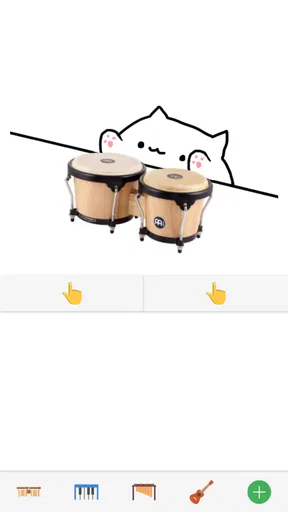
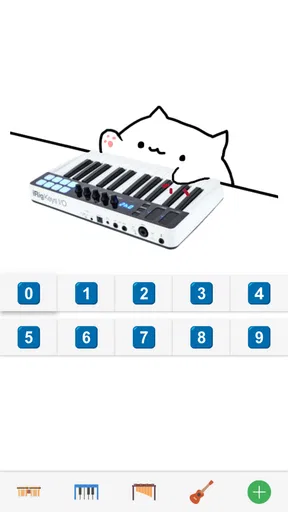
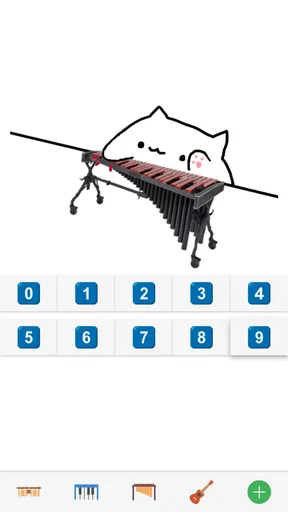
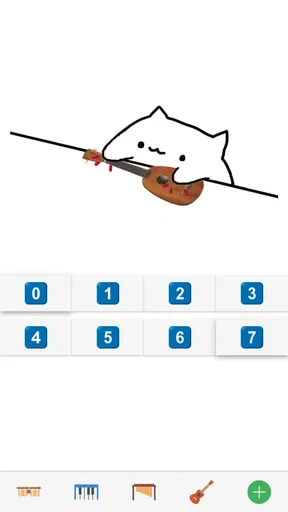
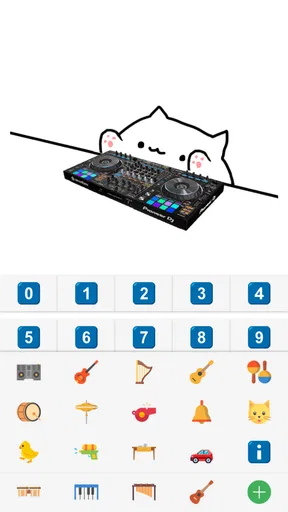
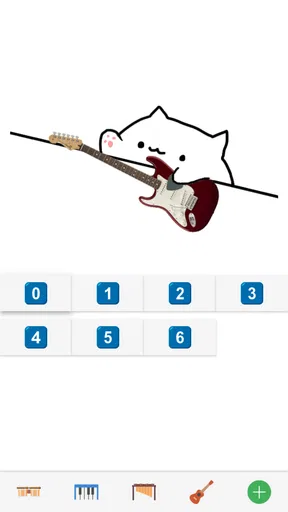
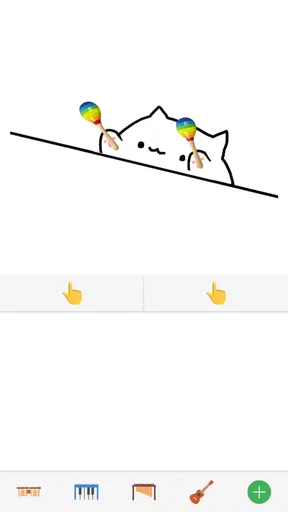
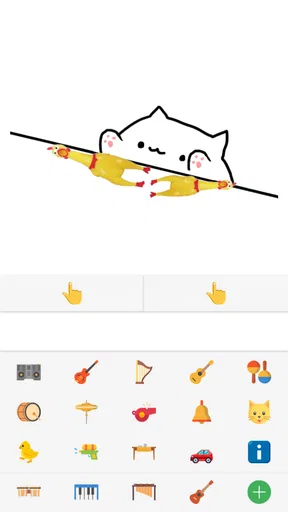
Our Review of Bongo Cat: Musical Instruments
 Analysis by Appyee
The first time I opened Bongo Cat: Musical Instruments, I understood its appeal almost immediately. It is a small music game from BudaCat that turns a simple animated cat into something I can tap for quick musical play. The idea is light, friendly, and easy to understand, which makes it inviting when I want a few relaxed minutes rather than a serious practice session.
What surprised me is how much of its value depends on the mood I bring to it. This is not an instrument-learning app in the traditional sense, and it is not trying to replace a keyboard, drum kit, or rhythm game with a deep progression system. Instead, it works best as a playful pocket toy: something I can open, experiment with, and share with someone nearby. The important question is whether that charm survives after the first week, so I looked at how it fits into repeated use rather than judging it only by its cheerful first impression.
From instant novelty to a repeatable little music break
The opening experience is refreshingly accessible. I do not need to understand music theory before trying it, and the basic interaction feels natural on a touchscreen. That makes the game suitable for children, casual players, and adults who simply enjoy tapping along to sounds. Its Everyone content rating also matches that approachable presentation, although younger players may still need ordinary device supervision for screen time and volume.
During the first few sessions, I found myself testing different rhythms instead of searching for a complicated objective. I would tap slowly, then try a faster pattern, then deliberately make a messy burst just to hear how the game responded. That freedom is the main attraction. The experience does not punish me for being unmusical, so it is easy to hand the phone to a friend or child without explaining a rulebook first.
A realistic use case is a short waiting period: sitting on public transport, taking a break between tasks, or keeping a child occupied while dinner is being prepared. In those moments, the game’s simplicity is a strength. I can start immediately, play for a minute or two, and stop without losing progress or needing to remember a complex mission. It is also a pleasant way to introduce someone to the idea that rhythm can be explored through play rather than treated as a lesson.
The first-week appeal also comes from the contrast between the cute character and the act of making sounds. The cat gives the interaction personality, while the musical focus gives the tapping a purpose. Without that combination, this would feel like pressing random buttons. With it, even a short session can feel like a tiny performance.
Still, I would not confuse immediate accessibility with depth. Players who expect a full rhythm-game structure, a large song library, formal levels, or a detailed practice curriculum may find the experience too loose. It is better understood as a casual music toy than as a demanding game. That distinction matters because the same simplicity that makes the first session welcoming can become the main reason some people stop returning.
Why the first sessions work so well
One useful approach is to treat the game as a rhythm sketchpad. Instead of tapping without a plan, I get more enjoyment by choosing a simple pattern first: alternating taps, a steady pulse, or a repeated accent. Then I change only one part of that pattern. This turns a few seconds of interaction into a small experiment and gives the session a clearer shape.
Another good habit is to use it socially. A person who finds the game repetitive alone may enjoy passing the phone around and asking others to create a rhythm. It works especially well as a low-pressure icebreaker because nobody needs to perform perfectly. The interaction is quick enough that a shy player can try it without committing to a long turn.
The game is free, which removes the biggest barrier to trying it. That does not automatically make it a good long-term fit for everyone, but it does make the first-week test easy: install it, play in short sessions, and decide based on the actual feel rather than on assumptions about music games. It has also reached over a million installs, with an average rating of 4.1 from around seventeen thousand ratings, so there is clear evidence that its compact idea has found an audience.
What remains after the novelty fades
After the initial amusement settles, the game’s recurring value depends on whether I enjoy open-ended tapping. There is no need to force a daily routine if that kind of interaction does not naturally appeal to me. I can return occasionally when I want something cheerful and undemanding, but I would not expect it to create the same sense of progress as a conventional rhythm game built around songs, scores, unlocks, or increasingly difficult challenges.
That makes its month-to-month role quite specific. It can remain useful as a small stress reliever, a casual activity for children, or a conversation starter. It is less convincing as a main game on my phone. Once I have explored the obvious rhythms and instruments, the question becomes whether the act of experimenting itself remains enjoyable. For some players, that open-ended quality is relaxing. For others, it feels like the experience has run out of things to say.
I think the best long-term comparison is not with a full digital audio workstation but with a novelty instrument app or a simple rhythm toy. Compared with a serious music-learning tool, it asks much less of me and teaches much less. Compared with a song-based rhythm game, it offers less structure and probably less motivation to improve. Compared with a physical toy instrument, it is more convenient because it is already on my phone, but it lacks the tactile variety and shared physical presence of a real object.
That trade-off is not a flaw by itself. In fact, it is why I can see a lasting place for it on the right device. I would keep it for moments when I want a playful sound-making activity without setting up equipment. I would not keep it as my only music app, because it does not serve focused practice, composition, or sustained challenge.
Making short sessions feel less repetitive
The most effective way to extend its usefulness is to give each visit a small purpose. I might spend one session trying to maintain an even beat, another making a call-and-response pattern, and another letting somebody else choose the rhythm. These self-imposed goals create variety without pretending that the game has a formal progression system.
It can also work as a reset between demanding tasks. I would not use it while trying to concentrate on reading or work, because sound and tapping can become distractions. Instead, I would use it deliberately during a break, with the intention of stopping after a short interval. That keeps the game in its strongest role: a compact diversion rather than an endless feed of content.
Parents may find it useful when they want a child to engage with music without immediately handing over a complex instrument. The child can explore rhythm and cause-and-effect, while an adult can join in rather than simply supervise. The limitation is that the app should not be presented as a substitute for lessons. It encourages playful interaction, but it does not provide the structured feedback I would want from a serious educational product.
For an adult user, the recurring value is more emotional than developmental. The animated cat and quick response can make a dull moment lighter. That is a legitimate benefit, but it is also fragile: if the visual charm does not appeal to me, there may not be enough underlying depth to compensate.
Maintenance, friction, and the reasons players may tire of it
The maintenance burden is low in the everyday sense. I do not need to tune an instrument, organize audio files, learn a control scheme, or prepare a long session. The current version is 2.6, and the game supports devices running Android 8.1 or later, so compatibility is worth checking before installation on an older phone. Once it is running, the main maintenance is simply deciding when it is still earning space on the home screen.
That last point matters more than storage or setup. Small novelty games often survive because they are easy to reopen, but they can also become invisible after a few days. I would keep this one accessible if I regularly enjoy short creative breaks. If I only played it once out of curiosity, removing it would be reasonable; its value does not come from a deep long-term system that I would be abandoning.
One source of fatigue is the absence of a strong external reason to return. A structured rhythm game can pull me back with a new challenge or a personal score to beat. A learning app can motivate me with a skill target. Here, I need to supply the reason myself. That is pleasant when I want freedom, but weak when I need motivation.
Another source of fatigue is the narrow interaction loop. Tapping instruments is immediately understandable, but the same clarity can limit discovery. Once I know how the core play feels, later sessions may resemble the first ones unless I intentionally invent new patterns or involve another person. Players who enjoy repetition may see that as calming; players who need constant novelty may see it as a stopping point.
The game may also be a poor choice for anyone looking for accurate musical training. I would choose a dedicated piano, guitar, rhythm, or ear-training app for that purpose. Those alternatives are usually better when I want lessons, notation, practice tracking, or measurable improvement. I would also choose a richer rhythm game if my priority were timing challenges and a sense of progression.
On the other hand, those alternatives often bring more commitment. They can require concentration, headphones, a larger download, or a willingness to follow a curriculum. This game wins when I want the opposite: something free, casual, and immediately understandable. The decision is therefore less about which product is universally better and more about whether I want a toy, a teacher, or a competitive game.
Small habits that protect its usefulness
I found that limiting sessions helps preserve the charm. If I keep tapping long after the interaction has stopped feeling fresh, the repetition becomes more noticeable. A short, intentional visit leaves the game feeling like a treat instead of turning it into background noise.
It also helps to separate solo use from social use. Alone, I can focus on patterns and sound. With another person, the same simple controls become a shared activity. Expecting the solo experience to provide endless content is where disappointment is most likely; using it as an occasional group diversion gives its simplicity a better context.
Volume is another practical consideration. A musical game can be fun at home but irritating in a quiet public place, especially when I am tempted to tap rapidly. Headphones may solve that in some situations, but I would still keep the volume moderate and avoid using it where sound could disturb others. This is ordinary phone etiquette, yet it affects whether the game fits naturally into daily life.
The free price makes experimentation easy, but I still judge it by attention rather than money. An app can cost nothing and still clutter a phone if I never open it. My test is simple: after the first burst of curiosity, do I use it for a specific kind of break, or do I only remember it when reviewing my installed apps? If the answer is the latter, it has probably served its purpose.
Who should keep it, and who should move on
I would recommend it to someone who likes cute, low-pressure games and wants a playful way to interact with musical sounds. It is especially suitable for quick breaks, informal play with children, and people who enjoy making their own rhythms without being judged by a score. The Everyone rating supports its broad accessibility, and the free download means there is little risk in trying it.
I would be more cautious recommending it to a musician seeking practice or to a rhythm-game fan who wants demanding timing tests. It does not occupy the same role as a virtual instrument designed for technique, nor does it offer the same kind of pressure as a competitive music game. If I needed structured improvement, richer content, or a reason to play every day, I would look elsewhere.
The developer, BudaCat, has kept the concept focused rather than turning it into something complicated. That focus is responsible for both the charm and the limitation. There is no learning curve to overcome, but there may also be no substantial second layer waiting after the novelty. The game’s lasting value comes from how well its small interaction fits my routine, not from how much content I can consume.
Its release on September 24, 2018, also helps explain why I judge it as an established casual experience rather than a new discovery that needs time to prove itself. With around one thousand three hundred written reviews and a 4.1 average, the response is positive without suggesting that every player finds unlimited depth. I read that balance as a useful warning: many people enjoy the concept, but enjoyment does not necessarily mean permanent daily use.
For me, the strongest long-term arrangement is to keep it available as an occasional mood-lifter. I would open it when I want a few seconds of playful sound, use it with someone who has not tried it, or turn a waiting period into a tiny rhythm experiment. I would not build my music practice around it, and I would not expect it to replace a more substantial game.
My final judgment is that it earns a small, conditional place on a phone after the novelty fades. It lasts when I treat it as a charming musical toy with a clear purpose, not as an endlessly expanding game. The low commitment, friendly presentation, and immediate interaction are genuine strengths. The narrow loop and lack of structured progression are genuine limits. If that balance matches what I want from a casual music game, Bongo Cat: Musical Instruments is easy to recommend; if I need depth, instruction, or long-term challenge, I would choose a different tool.
Verdict
Strengths of Bongo Cat: Musical Instruments
- Simple controls make it easy for beginners to play immediately.
- Includes several instruments for experimenting with different sounds.
- Cute Bongo Cat animations make practice sessions more entertaining.
- Works well for short, casual music sessions on mobile.
- Tap-based gameplay is accessible for users of different ages.
Limitations of Bongo Cat: Musical Instruments
- Limited depth may disappoint experienced musicians seeking advanced tools.
- Some sounds can feel repetitive after extended play.
- Timing and touch response may vary across different devices.
- Frequent prompts or ads may interrupt the playing experience.
- Requires careful tapping to avoid accidental notes and missed beats.
Similar Picks in This Category
View All
Tiles Hop Music & Ball Game
AMANOTES PTE. LTD.4.3

Magic Tiles 3™ - Piano Game
AMANOTES PTE. LTD.4.6

Real Piano
Bilkon3.7

Piano Game: Classic Music Song
Dream Tiles Piano Game Studio4.0

Smash Colors: Music Ball Rush
BADSNOWBALL HONGKONG LIMITED4.2

Piano Music Go-EDM Piano Games
Joy Journey Music Games4.5
Frequently Asked Questions
What is Bongo Cat: Musical Instruments?
Bongo Cat: Musical Instruments is a casual music app built around the popular Bongo Cat character. It lets you interact with virtual instruments and create playful sounds by tapping, pressing, or swiping on the screen. The app is designed mainly for entertainment and experimentation rather than professional music production, making it suitable for quick sessions and users who enjoy humorous, interactive musical experiences.
Which instruments are available in Bongo Cat: Musical Instruments?
The available instruments may vary depending on the app version and device, but the experience generally focuses on simple virtual instruments that can be played directly through touch controls. Users should expect an accessible interface with instruments intended for short melodies, rhythms, and sound effects. Before downloading, check the current store listing to confirm the exact instrument selection and supported features.
Is Bongo Cat: Musical Instruments suitable for children?
The app is generally easy for children to understand because its controls are simple and based on tapping or touching the screen. However, parents should review the store’s age rating, privacy details, advertisements, and any optional purchases before allowing unsupervised use. Sound effects and repeated tapping may also be distracting, so parental guidance is recommended, especially during longer play sessions.
Does Bongo Cat: Musical Instruments require an internet connection?
Basic interaction with the virtual instruments may work offline, but some functions can depend on an internet connection. Advertising, analytics, updates, online content, or external links may not be available without connectivity. Since requirements can change between releases, users should review the app’s current store description and test it after installation if offline access is important to them.
Is Bongo Cat: Musical Instruments free to download and use?
The app may be available as a free download, but free access can include advertisements, optional purchases, or limitations on certain content. The exact monetization model depends on the Android or iOS version and may change with updates. Before installing, review the store page carefully, particularly the in-app purchase section, so you understand whether any features or payments require additional approval.
Play our best games!


